
Open Hours
Mon - Fri:
7.30 am - 5.30 pm
Sat - Sun:
Closed

Category: News

Tips on How to Prevent and Survive a Vehicle Rollover

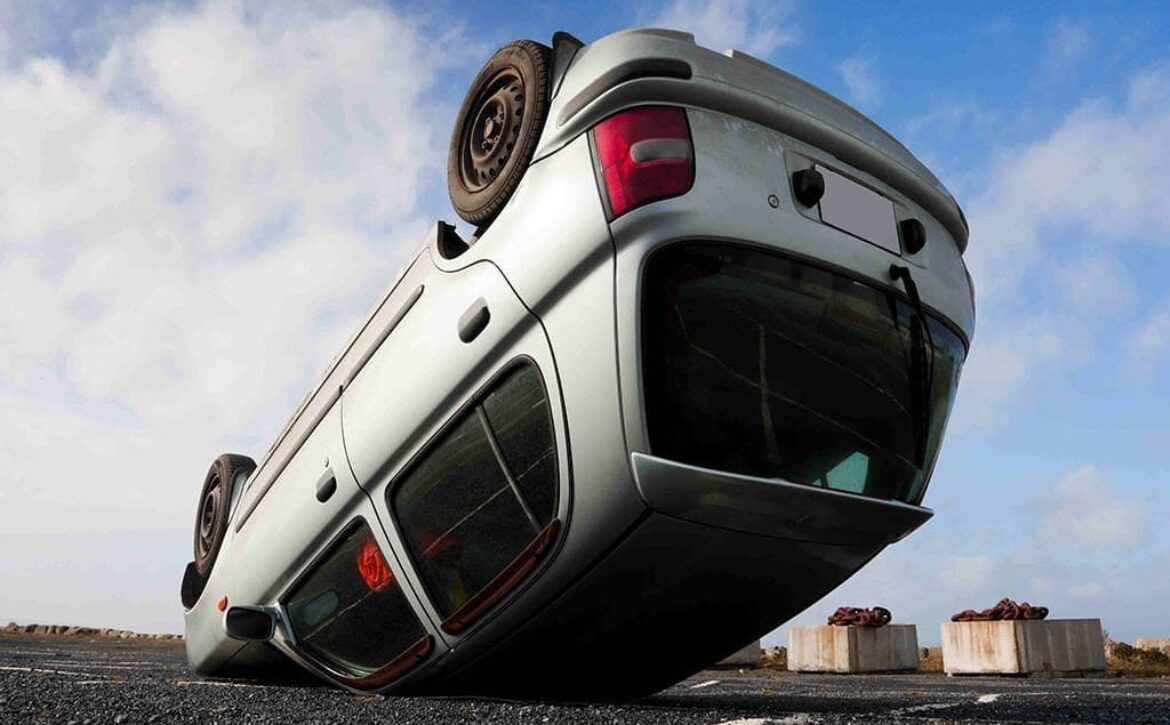
The scenario is all too familiar. You’re driving along enjoying the scenery and you begin to list a little toward the right side of the road. Your tire suddenly clips some debris, and you feel the steeling wheel jerk. You panic as you think you are about to have a collision and you attempt to steer fast to the left until you realize there’s an oncoming car so you quickly steer to the right again. And then, you flip your car. You could end up in the hospital and your vehicle will have to be repaired at an auto body shop. Think about the damage to your body, your car, and your wallet.

It’s all too easy, no matter how fast you are driving, to cause your car to roll over. While taller, more narrow vehicles such as pickup trucks, vans and SUVs are considered more likely to roll because of a higher center of gravity and their top-heavy stature, given the right conditions, any vehicle can roll over. How you prepare yourself and how you learn to maneuver in such an emergency, however, can greatly influence a positive outcome.

What may cause a vehicle rollover:

  • When a vehicle rounds a sudden curve, the gravity shifts greatly to one side which has a substantial effect on the vehicle’s balance, ultimately leading in a rollover
  • When a driver makes too sharp a turn one way and panics and overcorrects, a pendulum effect is created and the vehicle can roll over.

Avoiding and surviving rollovers:

  • Wear your safety belt so you are not ejected from the vehicle during a rollover crash. About 50 percent of rollover fatalities happen when a person is thrown from a vehicle and approximately 75 percent ejected die as a result.
  • Ensure your tires are in excellent shape and are properly inflated according to manufacturer’s specifications. This will help prevent blowout and loss of control.
  • Avoid overloading your vehicle as it decreases its stability. Never place the heaviest load on the roof as this changes the balance, and in the event of a sharp turn, you are more likely to flip the vehicle.
  • Keep your eye on the speedometer because speed can affect your vehicle’s tendency to roll over.
  • Remain extra vigilant when driving on rural roads as nearly 75 percent of fatal rollovers are said to occur on undivided, two-way roads or divided roads with no barriers where the speed limit is 55 mph or above.
  • Don’t panic! A substantial number of rollovers needlessly occur when drivers overcorrect their steering in an emergency and lose control.
  • Since vehicle manufacturers have worked diligently over the years on improving vehicle stability, performance and safety systems, vehicle and body shop experts agree newer vehicles are most often better when it comes to preventing and surviving a roll over.

What to do during loss of vehicle control?

While the government has not yet created standards that involve vehicle rollover prevention, there are vehicle performance standards to help protect occupants in the event of such an emergency.

With revised roof-crush rules and the advancements in computerized technology such as electronic stability program (ESP) or dynamic stability control (DSC), it is estimated a substantial number of rollovers occur as the result of general loss of control. When you panic during an emergency situation, you are more likely to overcorrect steering which can cause you to lose control. When a vehicle begins to slide sideways due to a sharp turn, it will most likely roll over. Most experts agree, if your vehicle begins to leave the roadway, it is best to reduce your speed until it is safe to re enter the roadway.

If you need any work done or existing damage repaired by a trusted body shop that serves Andover and Wichita, KS areas, contact the Collision Center of Andover at (316) 733-9310, and we will get you back on the road.

Six More Weeks of Winter

Prepping Your Car for Winter Road Trips

Unlike bears and other furry mammals, humans don’t get to hibernate through the winter. Although you might not want to go out in winter weather, staying home isn’t always an option. To help your car remain healthy while driving in low temperatures as well as on ice and snow, take a few steps toward properly winterizing your vehicle.

1. Select a Thinner Motor Oil

In cold weather climates, vehicles need to be equipped with oil that is less likely to freeze when the mercury drops. If you have doubts as to what type of oil is right for your vehicle, check with the manufacturer before your next oil change.

2. Inspect Your Battery

Battery capacity tends to diminish in low temperatures. Check battery fluid regularly during cold weather. Also, inspect cables for cracks or breaks. To check the age of your battery, look for the manufacture date stamped on it. When the time comes to replace your car’s battery, never purchase one with a manufacture date older than six months.

3. Replace Your Tires

A good set of tires is essential to avoiding collisions during the winter. Depending on where you live, you should replace your summer tires with snow tires, or have your car outfitted with a good set of all-weather tires.

4. Prepare for Emergencies on the Road

Before setting out on a road trip in the winter, make sure you have a full emergency kit in case of a breakdown or collision. This kit should include

  • Boots
  • Blankets
  • Radio
  • Coolant
  • Flashlight
  • Washer fluid
  • Flares
  • Dried fruit, nuts and other sustenance
  • Motor oil

Have you prepared your car for the rest of winter?

Regardless of how careful a vehicle owner is, sometimes collisions or other issues occur. Winter is still a time you need to be careful to avoid hitting a deer (we can help you after you’ve had a deer collision as well). If you need help with car repair or tow services this winter, don’t hesitate to call the auto body experts at Collision Center of Andover for assistance.

Five tips to help you find a great body shop

Searching for quality collision care in the Wichita/Andover area

When you need help for your car following a wreck, use these five tips to help you locate the best collision repair shop to get you back on the road.

1. Friends

When you need a body shop after a collision, your best resource can often be friends who have been in a car wreck and needed body work done on their vehicle. You know the people in your life won’t steer you wrong.

2. Collision repair shop reviews

Go online and read the reviews for body shops in your area. People, whether they happy or unhappy, enjoy voicing their unvarnished opinions. You might get an earful, but it will be worth it!

3. Interview, please!

If you have the time after your collision, call the shop and get a feel for the people who will be doing the work. Do they sound knowledgeable? Trustworthy? Are they too busy for your questions? This can be a real time-saver in terms of finding the right collision repair center for your needs.

4. Is the body shop online?

Some of the best, most modern, and customer-savvy body shops have a website or maintain another online presence, like Facebook, twitter, or a blog. Visit them and learn what they’re all about before getting your work done.

5. Damage control following a car wreck

Before you make your decision, if at all possible, take a minute or even overnight. Then take stock of what you need, what resources are available, and get ready to make your next decisions with as little emotional turmoil as possible.

Feel free to give Collision Center of Andover a call us at 316-733-9310 to ask your collision repair questions. Or, visit Collision Center online. We offer free estimates and you can even request a collision repair quote online! Need more information? Don’t worry! Click here to send us an email; we will reply!

Dealing with Emotions

Accident Aftermath:
How to Cope with Post-Collision Emotional Trauma

The U.S. Department of Transportation reported in 2017 alone, there were 7.3 million vehicle crashes and accidents. So if you’ve found yourself in a vehicle crash, you are not alone. Most people experience a car accident at some point in their lives, and while we all know to call the police, the tow company, and the insurance company, not many of us talk about the emotional trauma.

If you’re having trouble with emotions after a collision, here’s some coping strategies to help you manage:

Understand that collisions may be unavoidable
Many drivers involved in a car wreck will blame themselves for the accident—even if it wasn’t their fault. If you were driving at the time of the wreck, there may not be anything that you could’ve done to avoid it. You cannot control the actions of other drivers, environmental conditions, and countless other variables. Buckling up, staying alert, and abiding by all road rules is all that you can do behind the wheel. Even so, accidents still happen.

Talk to somebody about the wreck
If you are experiencing depression, confusion, anxiety, insomnia, mood swings, or other negative symptoms as a result of the accident, keeping your feelings inside will only intensify them. Release your stress through communication. Whether it’s talking to a family member, friend, your medical doctor or a therapist, venting is a very healthy way to manage your emotions.

Commit to a healthy lifestyle
Vehicular accidents can cause physical and psychological harm to the body. Some coping strategies include the standards: eat well, exercise, and get an adequate amount of sleep each night.

Keep busy
Try to stay busy by picking up a new hobby. Reading a book, playing sports, gardening, or a number of other activities can add happiness to your life while keeping your mind off the accident.

Reach out; seek help
Don’t let it fester. Find ways to cope with your emotions.

Know that all is not lost. It can be stressful to be without your vehicle after an accident, but most accident repair can be fixed. You can even expect to have your vehicle back to looking like you never got into an accident! Call us at (316) 733-9310 and let the auto body experts at Collision Center of Andover take on the worry of your car’s repair. We provide all the services your car or truck needs following a collision including complete vehicle repaint and restoration, computerized frame and unibody alignment, and even glass repair and replacement. We work diligently to get your restored vehicle back to you as quickly as possible. Read more about how long you can expect auto body repair to take.